Static vs. Dynamic: Why Smart Businesses are Making the Switch in 2026
You’ve finally printed 1,000 high-quality business cards or a massive storefront banner with a beautiful QR code. Then it happens: you change your website URL, or the promotional link breaks.
In the old days of QR codes, that was a disaster. You had to scrap the print and start over. But in 2026, the "Static" QR code—the one that never changes—is becoming a relic of the past for professional brands.
Enter the Dynamic QR Code. Here is why this small technical shift is the biggest upgrade you can give your marketing strategy this year..
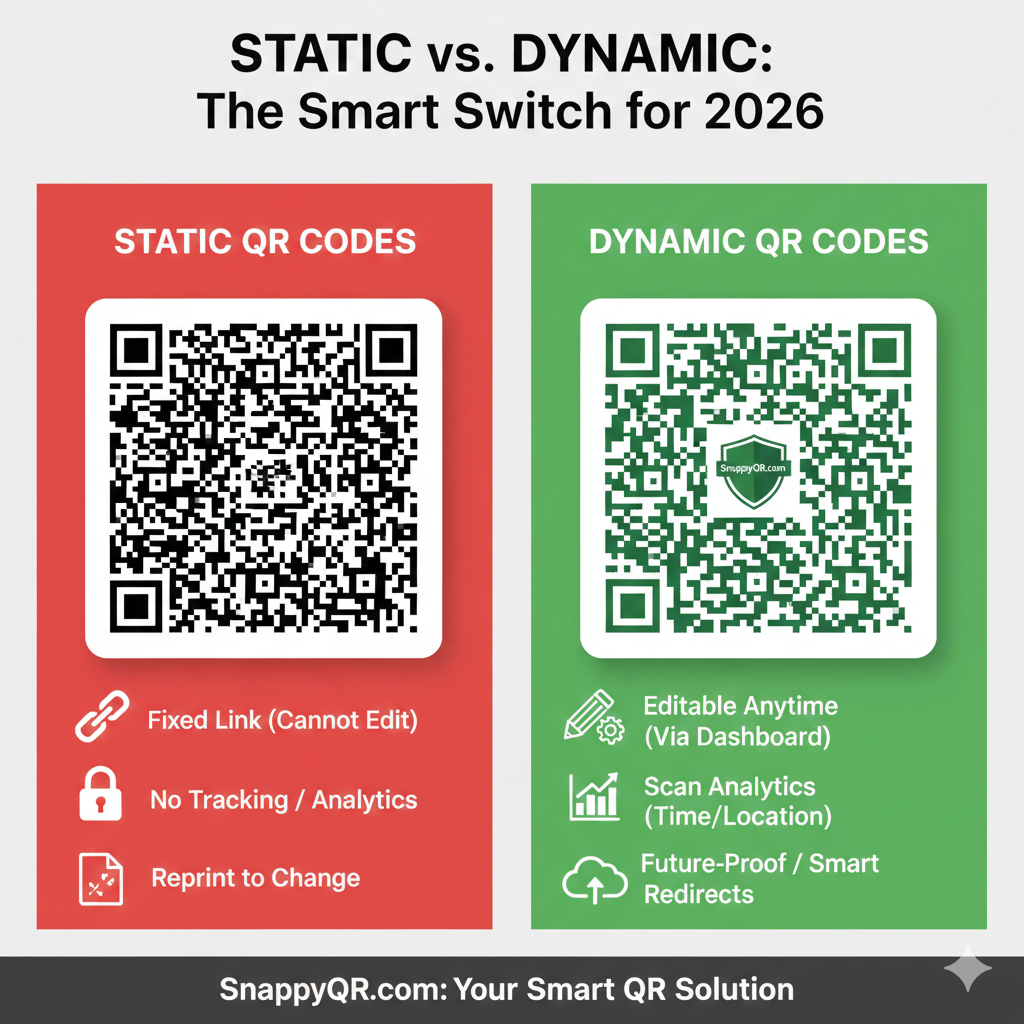
The "Oops" Protection: Edit After You Print
The biggest difference between static and dynamic codes is editability.
- Static: The data (like your URL) is hard-coded into the pixels. If the link changes, the code is dead.
- Dynamic: The code points to a "placeholder" link that redirects to your destination.
Using a tool like SnappyQR.com, you can log in and change that destination link whenever you want. Whether you're switching a seasonal menu or fixing a typo, your printed materials stay live and useful. It’s "future-proofing" your physical assets.
Data is the New Gold: Tracking Your Success
How do you know if your flyer at the local gym is actually working? With a static code, you’re flying blind. Dynamic codes give you real-time analytics.
- Scan Counts: How many people scanned it today?
- Location: Where in the city are your customers most active?
- Device Type: Are your users mostly on iPhone or Android?
By looking at your SnappyQR dashboard, you can see exactly which marketing placements are worth your money and which ones need a refresh.
Faster Scans, Cleaner Designs
Have you ever noticed that some QR codes look incredibly "busy" and take forever for your phone to read? That usually happens with static codes that contain long, complex URLs. Because Dynamic codes only store a short redirect link, the pattern stays simple and clean. This makes them:
- Easier to scan from a distance or in low light.
- More reliable when printed in small sizes (like on a jewelry tag or a business card).
Beyond the URL: Smart Redirects
In 2026, dynamic codes are getting even smarter. You can now set up "conditional" redirects. Imagine a single QR code on your product packaging that:
- Sends iPhone users to the Apple App Store.
- Sends Android users to the Google Play Store.
- Sends everyone else to your mobile website.
Which One Should You Choose?
- Use Static for: Permanent info that never changes, like a Wi-Fi password or a plain text "Thank You" message.
- Use Dynamic for: Literally everything else—marketing, business cards, menus, and social media links.
Take Control of Your Links
Don't let a broken link break your brand. By using SnappyQR.com to manage your dynamic codes, you gain the flexibility to pivot your marketing in real-time without ever touching a printer.
Ready to see the data behind your scans? Start creating your dynamic codes at SnappyQR.com today and turn your "dumb" squares into "smart" assets.